
Sturnia pagodarum
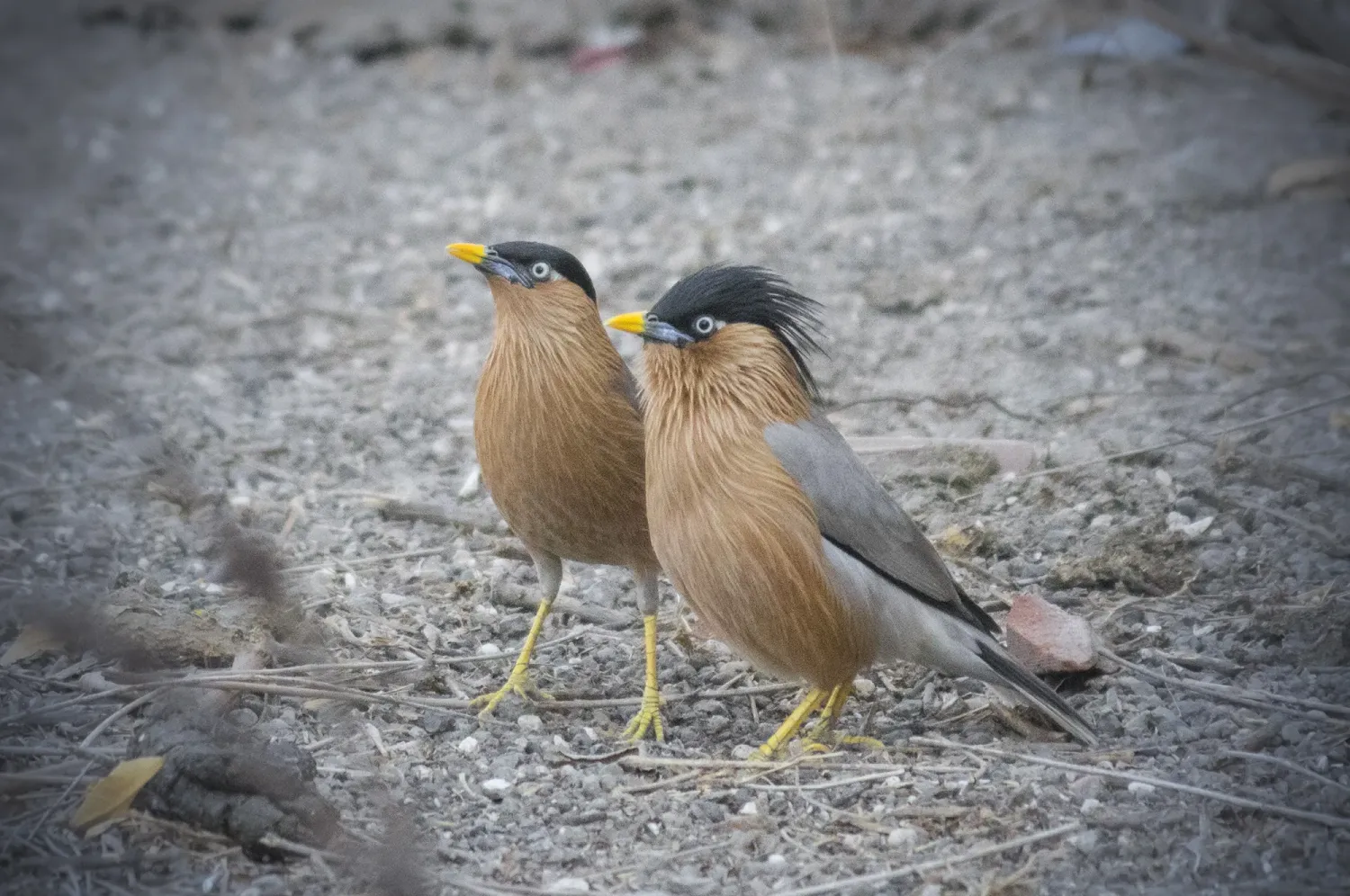
The Brahminy Starling (Sturnia pagodarum), also commonly known as the Brahminy Myna, is a distinctive and elegant member of the starling family. Widely recognized for its unique crest and buff-colored plumage, this bird is a familiar sight across the Indian subcontinent, often found bridging the gap between wild landscapes and human settlements.
Measuring approximately 21 cm, the Brahminy Starling is easily identified by its striking features:
The Brahminy Starling is highly adaptable and prefers dry open country and lowlands. Its typical habitats include:
This species is an omnivore with a broad and opportunistic diet. Its primary food sources include:
Brahminy Starlings typically nest in tree cavities or holes in walls and buildings. They are known to be opportunistic nesters, often utilizing man-made structures like temple pagodas, which has influenced their scientific nomenclature.
These birds are social and are often seen in pairs or small groups. They are frequently observed foraging on the ground or perching prominently on trees and buildings. Their behavior is characterized by their comfort around human activity, often living in close proximity to villages and urban centers.
The Brahminy Starling is currently categorized as Least Concern. It maintains a large range and a stable population, thanks in part to its ability to thrive in human-modified environments.
To find a Brahminy Starling, visit open scrublands or old architectural sites in South Asia. They are particularly active near water sources or damp fields during the early morning. Look for the distinct black crest and listen for their complex, liquid calls.
The Brahminy Starling is a fascinating example of avian adaptability. With its sophisticated buff plumage and bold black crest, it remains one of the most charismatic birds for enthusiasts to observe in both wild and urban settings.